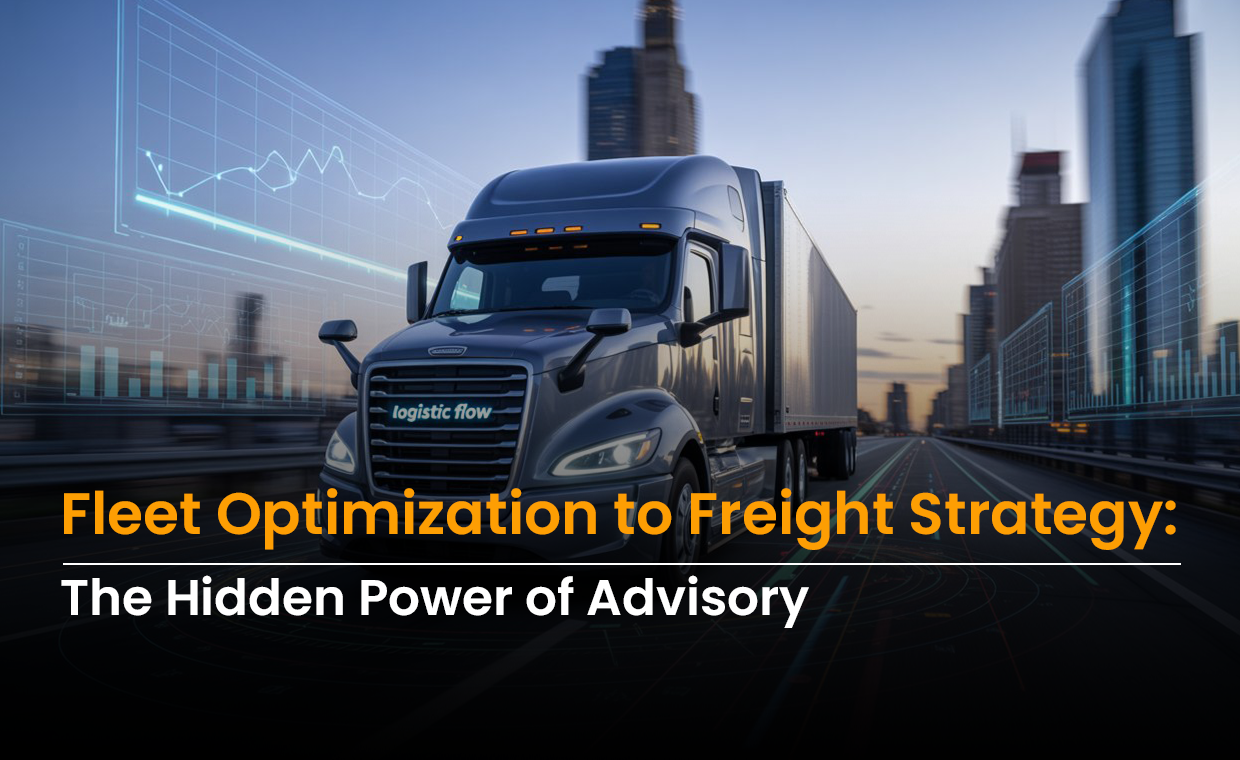
Every company is always looking for ways to boost its logistics to an upper level. Meeting deadlines for customer orders or ensuring the timely delivery of materials to a production plant are both important puzzles to solve. The answer to these puzzles lies in transportation, and more specifically, fleets.
However, managing a fleet is more than just keeping trucks on the road. Maximizing the business value of every vehicle and ensuring business goals have been met, every delivery, every route, is essential.
The fleet is a goldmine of insights. The company can capitalize on having external help in devising an operations-focused strategy.
Now, let’s understand these ideas further.
Fleet Optimization: More Than Just Saving Fuel
For many companies, improving their fleet usually comes down to reducing fuel consumption, cutting idle time, or investing in better routing software. While important, these aspects are only scratching the surface.
Complete fleet optimization presents more profound concerns, such as the following:
- Is your delivery model matched by your vehicle configuration?
- Are your drivers properly supported toward the goals of safety and productivity?
- In what ways does your transportation setup enhance or detract from your customer experience?
- Is your system capable of scalable growth?
If you’re only focused on cost reductions, you’re likely missing countless opportunities to drive substantial and sustainable value across the enterprise.
Freight Strategy: The Bigger Picture
An effective freight strategy solves more than the problem of moving goods from point A to point B.
It examines the entire route: from supply chain planning to the final mile delivery to the customer, asking:
- In what ways could we cost-effectively move the goods while still delivering with speed?
- Can we fulfill customer demand while also lowering our carbon emissions?
- Are we sufficiently agile to respond to supply chain disruptions?

Freight and logistics as industries are changing at an unprecedented speed. Customer expectations are increasing, sustainability policies are a necessity, and fuel prices are extremely volatile.
To meet customer expectations, businesses need to rethink their strategies. Improved planning and foresight will come with more than the latest tech and tools. Businesses need solid guidance, on-the-ground insights, and a defined roadmap.
So, Where Does Advisory Come In?
Here’s where the real action starts. Advisory is the bridge between connecting your wholesale fleet operations with wider strategic management.
It integrates everyday judgment calls, such as purchasing decisions on trucks or operational ones on route management, with your overarching corporate objectives.
Imagine a strategic advisor as a co-pilot in your business. They assist you in the following:
- Understanding the entire scope of the operations and not just the delivery dashboard
- Identifying the flaws and inefficiencies in their operations
- Making sound decisions in selecting the service providers and suppliers
- Planning for the long term and not just the next order delivery.
Imagine you are managing an average-sized distribution business. You own eighty trucks and business operations are running fairly well. While orders are being fulfilled on time, there is an increase in cost.
Autocomplete systems and changes to improve business operations. However, there is still much improvement to be made.
Consider this scenario: An advisory team is brought in, and after sifting through the data and engaging with employees, they uncover the following insights:
- Your fleet composition is suboptimal for urban deliveries.
- Your delivery windows do not match customer preferences.
- You’re overspending on short-haul deliveries that can be consolidated.
It becomes evident that the right approach not only saves money but also enhances customer experience, reduces emissions, and reallocates resources for growth, all of which are a result of strategic advisory.
Why Now Is the Time to Rethink Your Strategy?
Business fundamentals are changing fast. More complex, and costly, supply chains are struggling to meet rising customer expectations for quick and transparent deliveries. At the same time, regulations concerning sustainability are becoming more stringent.
Likely, the transportation processes and practices you established years ago are no longer viable.
In any case, Inobal is an expert in implementing better logistics strategies. Their unique approach helps companies undergo fundamental changes, not just solve problems.
Inobal is an expert in providing integrated solutions, from auditing and growth planning to digital transformation and brand equity. They ensure that logistics strategies align with tangible business results.
Just like Inobal's approach, growing companies understand that the business is not just within the trucks and the routes, it is also in the future they are driving to.

Simple Steps to Get Started
A complete transformation is not necessary; however, focusing on the smaller pieces can bring larger benefits later on.
1. Analyze What You Have
Evaluate your fleet. What progress have you made? What remains to be done? Are your expenses increasing at a much higher pace than your revenue? Are your clients satisfied?
2. Clearly Define Goals
How do you envision your transportation model? Are you looking for a lower cost per shipment? Would you like lower carbon emissions? Growth in new markets? Set your targets.
3. Bring In External Advisors
Look for partners who focus specifically on fleet management. You need a partner who not only identifies problems but also offers solutions.

4. Implement the New Strategy
With a new strategy, you should be ready to take action. You may need to shift your fleet mix, update your systems, alter your carrier contracts, or develop new partnerships.
5. Refine and Measure
Building adaptable systems is essential because the best freight strategies are flexible. The key to continuous improvement is the ability to track results and change rapidly.
Wrapping It Up
Freight strategy and fleet optimization are not solely operational matters, they also relate to the overall business strategy. Winning companies in the sector see logistics not merely as an expense to control, but as an opportunity for growth.
With the appropriate strategy in place and expert support, fleet logistics can help in advancing the business.
Turn fleet logistics into a competitive advantage by engaging in a strategic conversation. Most of the time, having the right advice is enough to discover a better path to progress.
✉ Stay Ahead in Business
Get expert insights delivered to your inbox every week.