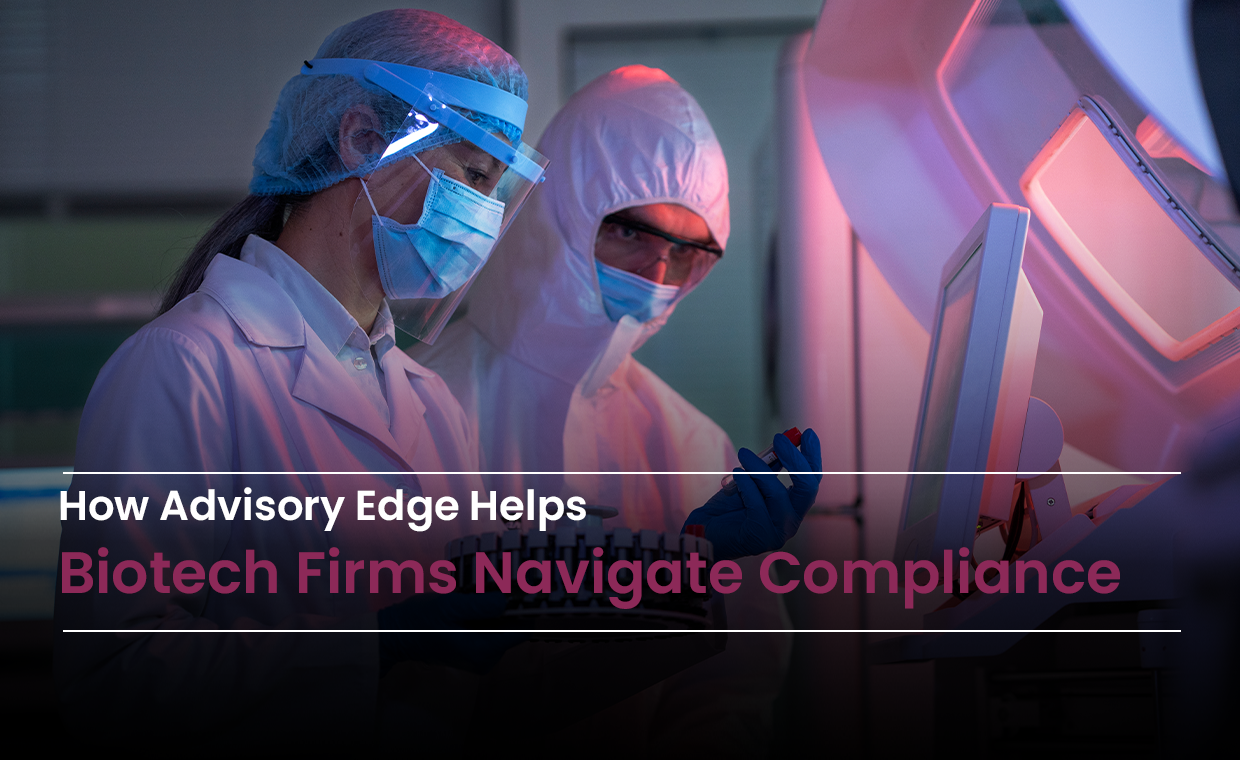
The biotech industry is one of the most dynamic and exciting areas to work in. New therapies, new treatments, and new technologies are continuously changing healthcare and saving lives. However, behind the science and discovery lies a complex and critical challenge, compliance.
Biotech regulations are complex, strict, and constantly changing. Missing a simple detail is not an inconvenience, it can result in delayed approvals, cost millions, and destroy investor faith and commitment to your drug. For new biotech companies, as well as the established and experienced companies, it can be overwhelming. That is where having the right advisory edge plays a role.
Advisory services can provide biotech companies with the expertise and the structure to remain compliant while allowing you to stay focused on being innovative. Let's take a look at that.
Why Compliance Is a Big Deal in Biotech?
Biotech does not have the same tolerance for mistakes as many other industries. When a company is developing therapies, conducting clinical trials, testing patients, or managing sensitive patient information, regulators require the highest level of expectation.
Some of the compliance challenges are below.
- Constantly changing regulations from one country to the next
- Detailed documentation completed for each step of research and trialing
- Data protection and privacy requirements like HIPAA and GDPR
- Ethical issues in genetic and patient testing
- Limited internal resources for small businesses
The rules may feel like bureaucracy, but they are put in place for safety and transparency. However, when you do not have guidance and are just trying to keep up with compliance, it is difficult - and very risky.
The Value of Advisory Support
Advisory services help solve the space between innovation and regulation as they allow biotech firms to integrate compliance into their mission rather than have compliance as an afterthought.
The ideal advisors will give you as below,
- Clarity on what regulations apply - and the best way to comply
- Strategies to avoid costly errors or delays in trials
- Processes that simplify audits and inspections
- Training to develop internal team members as champions of best practices
For biotech founders and scientists, this means less time worrying about paperwork and more time working towards discovery.

Where Advisors Make the Biggest Difference
1. Constructing a Regulatory Roadmap
There is a path to approval that all biotech projects must identify and follow. Advisors assist in developing that roadmap -- establishing timelines, requirements, and submission approaches -- making sure the project keeps moving.
2. Supporting Clinical Trials
Clinical trials are the critical point in moving biotech forward, but they clinical trials tend to be the most regulated. Advisors help firms through patient consent, data collection, and reporting, and have an incentive to avoid disruptions that can be costly to the company.
3. Documentation and Audit Preparedness
Audits and inspections only get stressful if you are unprepared. Advisor services, make sure you have established proper systems for documentation, which ultimately translates to documents being accurate, organized, and ready to go at any time for an audit.
4. Quality Management Systems
Consistency is important. Advisors implement quality management systems that ensure products meet global safety and quality standards.
5. Data Privacy and Security
As more and more biotech companies utilize patient data, data protection is very much in the spotlight. Advisors ensure that firms comply with privacy and data protection laws while also safeguarding sensitive data.

The High Price of Getting It Wrong
Consequences of non-compliance extend beyond regulatory fines. Delays to clinical trials, loss of resources and market share, and ultimately loss of confidence from investors and partners. A single mistake can cost a startup years of work.
On the other hand, companies that make compliance a priority at the outset grow their credibility with partners, regulators, and investors, and it becomes a competitive advantage instead of a burden.
Turning Compliance Into Growth
- Speedier approvals with less time wasted waiting
- More investor confidence through transparent practices
- Prospects for partnerships with larger pharma players
- Confidence to grow globally, not being impeded by country-specific rules
Advisors allow you to concentrate on innovation, knowing your compliance base is covered.
A Look at Inobal’s Approach
With many advisory providers, Inobal has received attention for their integration of regulatory insight and facilitated resourcing tailored to biotechs. Their support is not box-ticking. They build scalable compliance frameworks that develop with the business.
From an accelerated, resource-stretched startup perspective, Inobal enables compliance not to stifle innovation. For established players, it enables tightly scaled operations staying lean for audits.
Inobal presents the right advisory partner's ability to turn regulatory compliance into a momentum opportunity.
Preparing for the Future
The future of biotech comes with even more regulatory complexity. AI-based drug discovery, personalized medicine, and gene editing are going to put pressure on agencies, which will require them to introduce more regulations. Data transparency and ethical sourcing are going to be even more important.

Advisory services will be needed to assist companies as they move quickly. Those companies that remain proactive rather than reactive will be the leaders in this highly competitive industry.
Wrapping It Up
Biotech companies can’t consider compliance to be a nice-to-have. The risks are too great, as are the rewards for those who get this right. The advisory practice guides, along with systems and strategies to help navigate this space calmly.
By getting the advisory advantage, biotech innovators can minimize risks, expedite regulatory approvals, and concentrate on solving important problems and creating life-saving outcomes.
And with expert partners such as Inobal supporting the conversion, compliance can be less of a hindrance and more of a stepping stone to achieve long-term success.
✉ Stay Ahead in Business
Get expert insights delivered to your inbox every week.