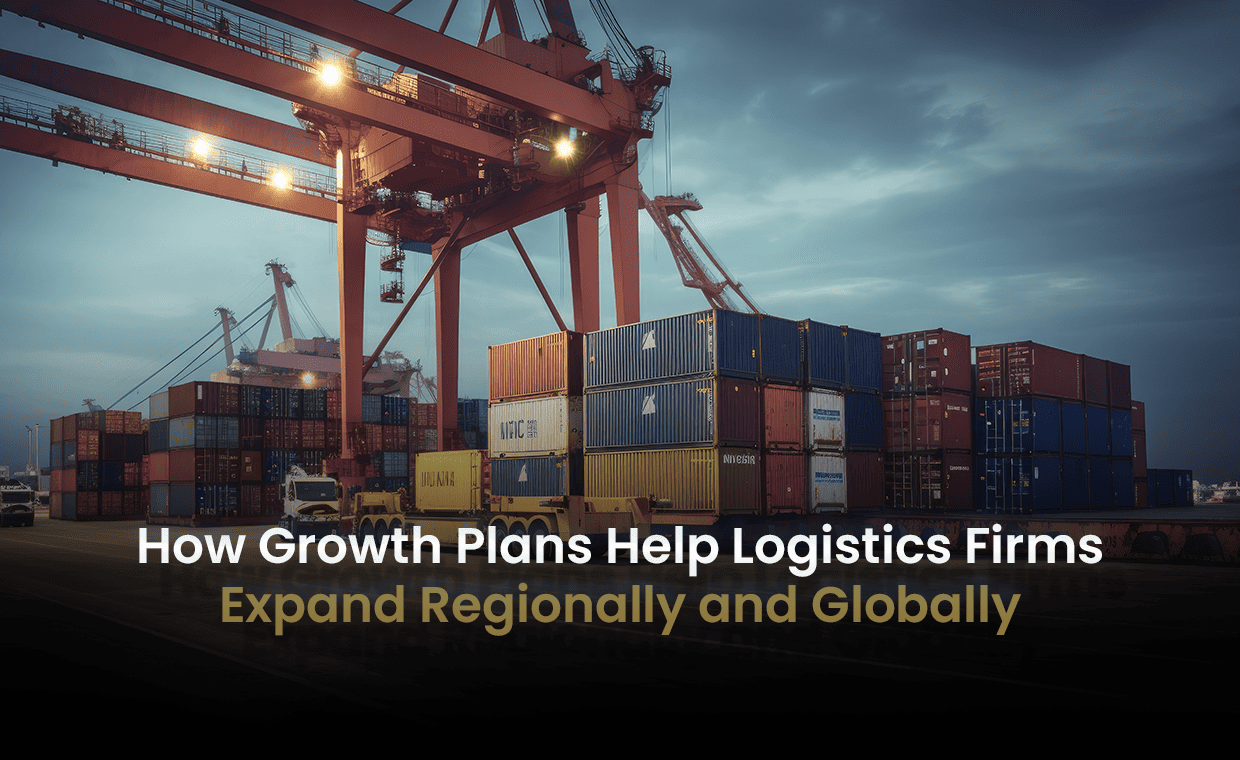
Logistics companies are key players in the continual movement of goods, from factories to retail stores, from cities to villages, and across geographic borders. However, as the market becomes increasingly competitive, operating efficiently alone will no longer suffice.
To develop and move forward, logistics companies need a structured growth plan, an outline that explains where they want to go, how to get there, and what they will do to get there.
A well-prepared growth plan enables logistics businesses to expand into new areas and globalize their operations as well as approach obstacles with a strategic mindset. It turns ambition into reality.
What Is a Growth Plan?
A growth plan is a structured approach that allows a company to identify its objectives and determine the best path to accomplishing those objectives. For logistics companies, this means taking time to think through and map out, step-by-step, how to grow routes, services, and clients.
A growth plan indicates the optimal places where your company needs to invest, what markets you want to pursue, and the best way to manage your operations.
A suitable growth strategy allows logistics firms to,
- Identify new markets and new business prospects.
- Refine their infrastructure / improve their delivery systems.
- Utilized technology to work smarter.
- Forge solid partnerships with both suppliers and customers.
- Grow consistently without losing control of the cost base.
Without a growth strategy, firms tend to make random decisions that ultimately lead to wasted time and energy.
Why Logistics Firms Need to Expand Regionally and Globally
In the last few years, logistics has actually become a global industry. Goods are produced in one country, assembled in another country, and sold all over the world. These demands force logistics companies to grow beyond their local markets.
Here’s why expansion is necessary.
1. To Reduce Risks
Relying on one area or one customer base is risky. If demand decreases in that region or with that group of consumers, you face a slowdown in business. Growing into new regions helps spread the risks and maintain revenue.
2. To Serve Global Supply Chains
A lot of manufacturing and e-commerce companies now operate globally. They expect their logistics partners to have a global presence to handle international shipping properly.
3. To Reach Emerging Markets
There has been a sharp increase in trade and online shopping among countries in Asia, Africa, and Latin America. With sufficient planning, logistics companies can get into these countries quickly and scale in these markets fast.
4. To Use Technology Better
Expansion enables companies to standardize processes and use common technology systems internationally. For example, from tracking software to AI route optimization.
Basically, regional and global expansion gives logistics companies the opportunity to remain competitive and pertinent anywhere in a fast-paced world.

How Growth Plans Help in Regional Expansion
Regional expansion is the first step toward bigger ambitions. Companies with a strong growth plan can expand logistics operations without sacrificing performance and remain in full control.
1. Market Research and Planning
A growth plan begins with research to determine where demand is growing, cities or states with a more efficient infrastructure, and cities or states with fewer existing competitors. That allows for thoughtful decisions rather than guesses.
2. Setting Up Infrastructure
To grow, we will need to invest in warehouses, vehicles, or form partnerships with local transporters. The growth plan continually specifies where and when we will invest, decisions are made, and resource allocation is effective.
3. Hiring the Right Talent
When expanding into new markets, it involves the employment of qualified drivers, managers, and support personnel. A sound strategy will address the workforce strategy, i.e., how to recruit, train, and retain employees in the new region.

4. Using Technology
Modern logistics relies on technology, from GPS tracking to automated dispatch systems. A growth plan establishes crystal clear timelines of when and how you will adopt new tech tools to save time and costs.
5. Building a Local Brand Image
Whenever companies enter new areas, they must gain trust. A growth plan can determine whether the current marketing and customer service will meet local expectations while also being consistent with brand messaging.
How Growth Plans Support Global Expansion
Expanding into global markets is a major move that comes with major challenges, differences in laws, currencies, and cultures. A strong growth plan will help make the process smoother and easier to manage.
Here’s how it assists logistics companies in their global success.
1. Spotting Global Opportunities
You cannot expand into every country. A growth plan helps identify the international markets that match your company’s strengths, things as regions with trade routes that match your strengths.
2. Following Rules and Regulations
Each country has its own customs laws and labor policies. A growth plan will have a compliance checklist to guide the company to comply with rules at all levels to avoid penalties.
3. Forming Partnerships
Rather than starting from the ground up, organizations often work with local suppliers or distributors. A growth plan identifies the right partner and establishes a win-win situation.
4. Managing Finances
Taking your business global is a big commitment, and it takes serious capital. A good plan helps with the management of your cash flow, budget, and attracts investors with future projected financial outcomes.
5. Understanding Local Markets
A product that is successful in one location might not work in another location. A good plan is to study local business customs, customer needs, and the culture that affects relationships.
If achieved properly, it would transform a logistics firm from a regional logistics firm to a brand recognized and known globally, along with good, sustainable growth.
Technology: The Backbone of Modern Logistics Growth
- With automation, manual errors are reduced, and the processing will go faster.
- AI and data analytics grow demand, predictability, and optimize delivery routes.
- IoT devices provide real-time tracking for shipments.
- Blockchain makes transactions more secure and reliable.
- Cloud systems will provide seamless connectivity between teams regionally and globally.
If logistics companies undertake proper planning, these upgrades will allow for rapid scaling of their operation, and they can handle larger volumes without losing quality or control.
Common Challenges During Expansion
- Infrastructure limitations: Any area may not have great road access or ports. Planning allows you to identify these types of risks sooner rather than later.
- Regulatory barriers: A country may have tax or customs policies different from your country. Having a plan allows for a smooth change.
- High overhead: Expanding your business will involve costs upfront, but with a budget in the plan, fixed costs are manageable.
- Cultural and communication barriers: Learning and understanding local ways of doing things and language increases relationships and market development.
- Stiff Competition: Expanding your business may be subject to local competitors. The plan must provide offerings not currently in the marketplace.

The Role of Partnerships in Growth
No business grows alone, especially in the logistics space. Strategic partnerships are crucial to growth.
Collaborating with technology vendors, consultants, or regional distributors allows logistics companies to grow faster and grow better.
It grants access to:
- Leading technology and automation solutions.
- Knowledge of local markets and networks.
- Assistance with regulatory compliance.
- Costs are shared, and the risk of loss is borne.
Many logistics businesses today partner with providers of growth strategies who work on designing and implementing growth strategies for businesses.
One such example is recognized as a consulting and strategy partner that aligns innovation, digital transformation, and growth strategies for businesses. One of the benefits of working with expert partners like Inobal is that they provide the insights and structure to grow efficiently and profitably.
Wrapping It Up
While it may appear complicated at first, regional and global expansion is a structured and achievable process with the right growth plan. Logistics companies that plan their growth carefully will make wiser investments and better serve their customers in the process of adapting to global trends.
Also, by utilizing the expertise of growth strategy partners like Inobal, logistics firms can leverage innovation, technology, and planning as a means to achieve their goals.
After all, growth in logistics = growth with purpose.
✉ Stay Ahead in Business
Get expert insights delivered to your inbox every week.