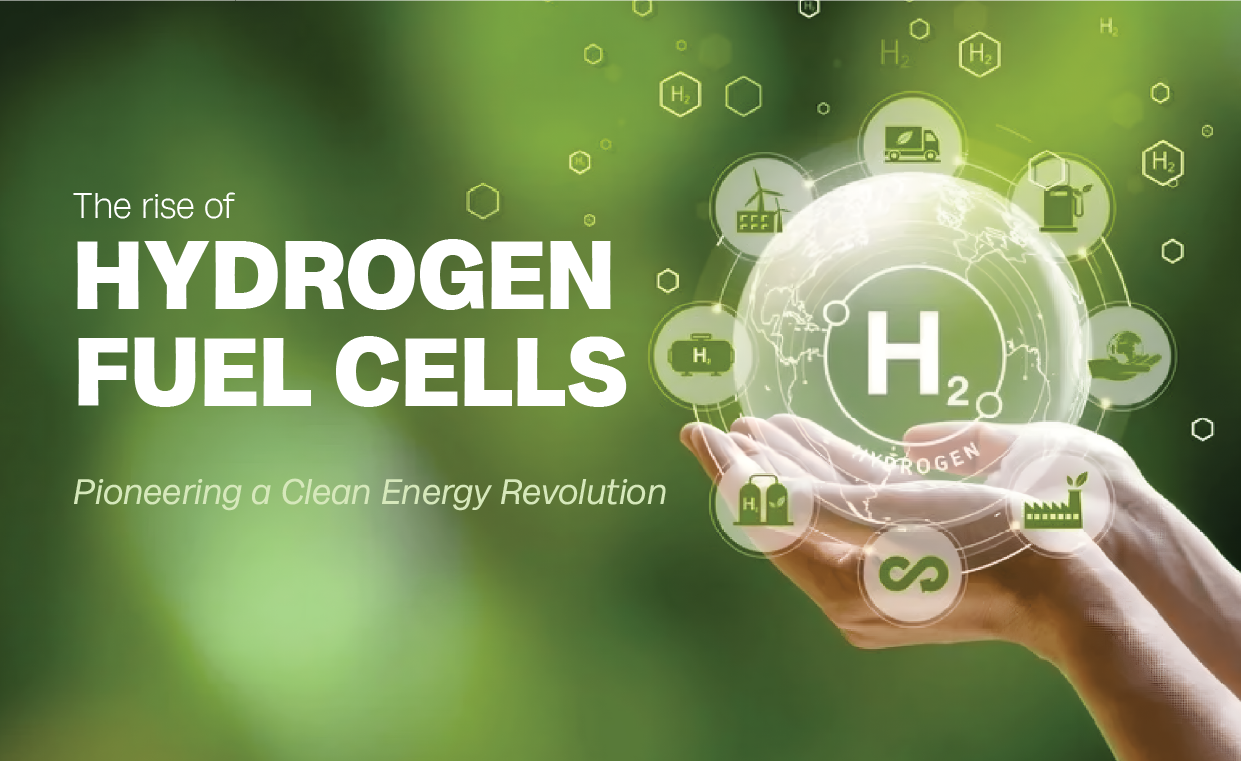
Hydrogen fuel cells have become a revolutionary technology with the potential to change many sectors as the world struggles with the urgent demand for better energy sources. Hydrogen fuel cells provide a sustainable substitute for fossil fuels from power generation to transportation, lowering greenhouse gas emissions and guaranteeing great efficiency. The future looks bright given governments and businesses are heavily investing in hydrogen technologies. Let us investigate their ascent and their indispensable part in a revolution towards clean energy.
Understanding Hydrogen Fuel Cells
By means of a chemical reaction between hydrogen and oxygen, hydrogen fuel cells generate electricity; the only by-products are water and heat. As long as they have hydrogen, fuel cells constantly create power, unlike conventional batteries that store energy. Working together to enable the electrochemical process, a hydrogen fuel cell consists fundamentally of an anode, cathode, and electrolyte membrane.
Combining low harmful emissions with great efficiency and scalability makes hydrogen fuel cells a major competitor in the shift towards environmentally friendly energy sources.
The Development of Hydrogen Fuel Cells
The concept of hydrogen fuel cells originated in the early 1800s when Sir William Grove first proposed a fuel cell. Still, only in the late 20th and early 21st centuries, did technological advancements make feasible useful applications in sectors including automotive, aerospace, and power generation.

Rising worries about climate change and the pressing need to lower carbon emissions have sped research and investment in hydrogen fuel cells, especially for sectors like heavy transportation and industrial manufacturing that are challenging to electrify, hydrogen is today seen as a reasonable substitute for traditional fuels.
Key Benefits of Hydrogen Fuel Cells

1. Zero Emissions and Environmental Benefits
The environmental effect of hydrogen fuel cells is among their most important benefits. Hydrogen fuel cells eliminate carbon dioxide emissions by producing just water vapour as a byproduct unlike those of fossil fuels, this makes them absolutely vital for worldwide initiatives to slow down global warming.
2. High Energy Density and Efficiency
Since hydrogen fuel cells have a higher energy density for uses like electric vehicles and power backup systems, they are a better energy storage method than conventional batteries and they can be refuelled in minutes while a combination of lithium and ion batteries must be recharged over hours.
3. Renewable and Abundant Fuel Source
The most plentiful element in the universe, hydrogen can be generated by several techniques including electrolysis run under renewable energy sources. This makes hydrogen an infinitely sustainable fuel source, lowering reliance on a limited supply of fossil fuels.
4. Versatile Applications
There is no one sector where hydrogen fuel cells find application. In transportation - cars, buses, trains, and ships, stationary power generation - backup power systems and off-grid energy solutions, and industry processes - steel manufacturing and chemical production. This adaptability helps them to propel a clean energy revolution in several spheres.
Challenges and Limitations
Notwithstanding their many benefits, hydrogen fuel cells still present major issues that need to be resolved if they are to be adopted generally.
1. High Production and Infrastructure Costs
As platinum used in catalysts is costly, the cost of manufacturing hydrogen fuel cells is rather high right now and to further build the required hydrogen refuelling infrastructure calls for substantial financial commitment, so slowing down major implementation.
2. Hydrogen Production Methods and Sustainability
Most hydrogen generated today comes from natural gas via a carbon dioxide-emitting steam methane reforming process. Green hydrogen generation by electrolysis using renewable energy has to be scaled up if we are to reach actual sustainability; this remains expensive and energy-intensive.
3. Storage and Transportation Issues
The extreme flammability of hydrogen calls for specific transportation and storage techniques. Compressed or liquefied hydrogen for transportation increases logistical difficulties and expenses, hence it is less competitive than other fuels or battery storage systems.
Industries Leading the Hydrogen Revolution
1. Automotive and Transportation
Already on the market are hydrogen fuel cell vehicles by big automakers including Toyota, Hyundai, and Honda; furthermore being used worldwide are hydrogen-powered buses and trucks, especially in areas giving zero-emission transportation a top priority.
With companies like Alstom building hydrogen-powered trains and shipping giants investigating hydrogen as a cleaner alternative to diesel engines, rail and maritime sectors are also embracing hydrogen fuel cell technology.
2. Energy and Power Generation
Applications for stationary power including backup power systems for hospitals, data centres, and industrial facilities are progressively hydrogen fuel cells being used and to effectively mix renewable energy sources, nations including Germany and Japan are heavily funding hydrogen-based power grids.
3. Aerospace and Space Exploration
For decades NASA has been using hydrogen fuel cells in space missions since their great energy density and dependability. Private space companies joining the market mean that hydrogen will be increasingly important for future space exploration and energy storage for extra-terrestrial habitats.
4. Industrial Manufacturing
Hydrogen fuel cells are under investigation by sectors including chemical processing, fertiliser manufacture, and steel production as a substitute for conventional fossil fuels. Particularly green hydrogen is becoming popular as a way to decarbonise industries requiring a lot of energy.
Global Initiatives and Future Prospects
Everywhere governments are stepping up initiatives to hasten the hydrogen economy and by 2030, the European Union's Hydrogen Strategy seeks to have at least 40 gigawatts of renewable hydrogen electrolysis capability installed. Likewise, nations including Japan, South Korea, and the United States have unveiled ambitious hydrogen roadmaps to foster infrastructure development and innovation support.

Over the next ten years, rising investment, technological developments, and policy support should help to lower the cost of hydrogen fuel cell manufacture and infrastructure, thus increasing their availability and competitiveness.
Conclusion
Offering a sustainable, highly efficient substitute for fossil fuels, hydrogen fuel cells are clearly the leading edge in the clean energy revolution. Although infrastructure, manufacturing techniques, and cost still present difficulties, the fast development in hydrogen technology combined with strong government and industry support positions it as a major participant in the future of energy.
Adopting hydrogen fuel cells could be a revolutionary way to reach energy security, sustainability, and a cleaner planet for the next generations as we travel towards a decarbonised world. Though the road is still long, hydrogen fuel cells are here to stay and will help usher in a new era of clean energy invention.
✉ Stay Ahead in Business
Get expert insights delivered to your inbox every week.