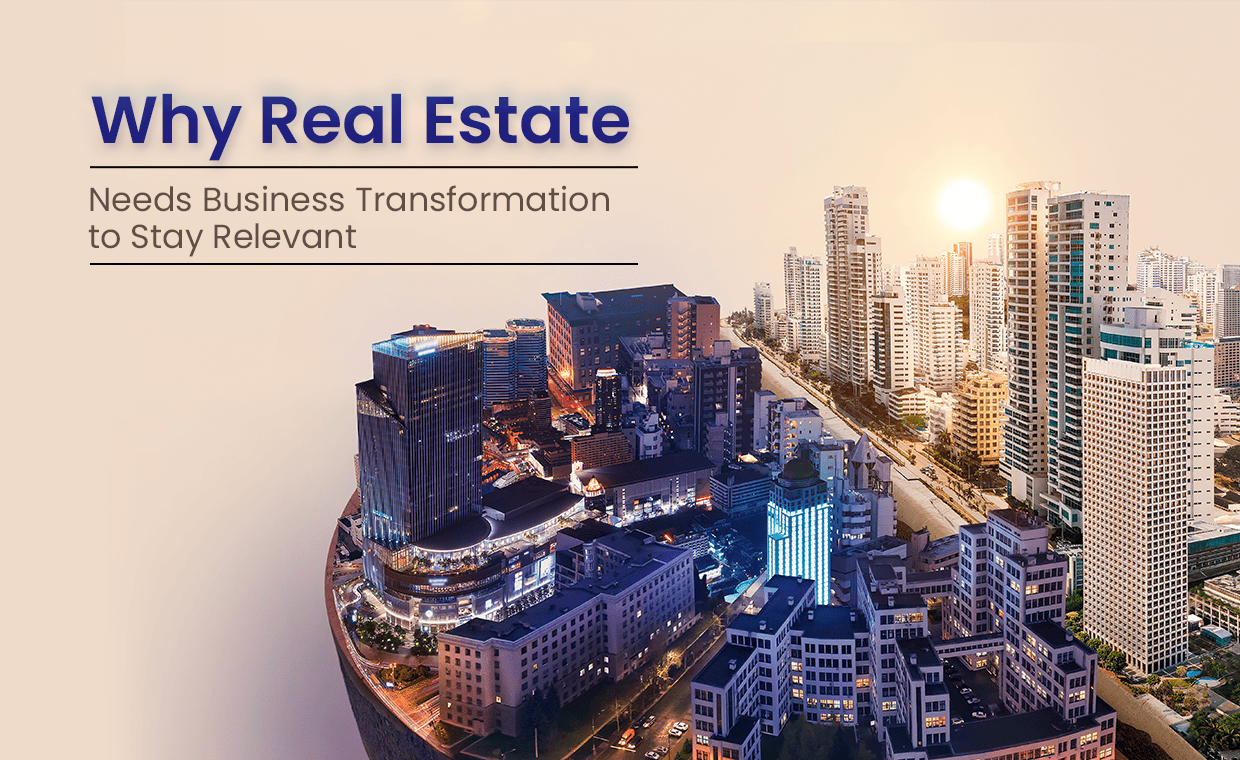
For many years, the real estate sector was one of the more consistent industries. Properties were purchased, sold, leased, and managed in methods that were unchanged over the previous few generations.
Developers built new projects, brokers closed deals, and investors depended on property appreciation. However, in the last year or two, the consistency began to show cracks.
Buyers are different. Tenants are different. Technology is changing the way people search, compare, and engage with property. And the new category of competitors, nimble proptech companies, is getting in at the ground level and capturing market share. The result is that traditional companies face a new level of pressure.
This is the beginning of your transformation. It’s not a move to get to more digital tools on your flagship offerings or a new website. It’s a complete way of thinking about how a real estate company operates, from customer experience and data usage to sustainability and efficiency. Without the new way of thinking, it will be nearly impossible to build a relevant business.
The Industry Is Changing Fast
Digital-first buyers and tenants
Consumers now expect to research, view, and sometimes even close transactional deals on properties digitally.
You are likely to lose these individuals to your competitors if you continue to make property seekers come to an actual property to physically view it, or if you continue to rely on paper-filled contracts.
Technology is everywhere (and affecting property transactions)
Whether it be AI pricing property valuations, virtual reality for tours, or blockchain ledgers for contracts, technology is changing the way deals are done.
Companies will only move quickly and grow quickly if they address technology first in their transaction process.
Sustainability isn’t optional anymore.
Governments, Investors, and End-Users are all considering whether the building(s) are sustainable or energy-efficient.
If the portfolio of investment property does not have some sustainability or energy-efficient standing, it may lower the appeal of the properties to the market.

Markets in flux
Global forces, interest rates, inflation, urban migration, and even remote work are making old strategies risky, and you’ll need the flexibility to adapt.
Adding it all up, the conclusion is simple: the real estate business won’t be able to think or work the old way. Change is no longer an option.
Why Transformation Matters
1. Customers want better experiences
Consider how effortless it is to order food, shop online, or book a vacation. Real estate buyers and tenants carry those same expectations into property deals.
They want virtual tours, immediate responses, clear pricing, and uncomplicated digital contracts. Business transformation provides organizations with the capability to provide that kind of effortless experience.
2. Data is gold if you use it
Real estate companies have vast quantities of data: profiles of buyers, historical transactions, real estate pricing, and tenant preferences.
The issue is that most of it is left untapped. When businesses apply analytics to their data, they can identify their demand accurately, set optimal pricing levels to be competitive, and personalize their offerings. That's the insight transformation can bring.
3. Efficiency saves money (and time)
Manual processes such as contracts on paper, checking documents face-to-face, and making a lot of phone calls are slow and expensive.
Automated systems that take advantage of cloud-based collaboration and integrate with a CRM reduce costs and improve outreach.
4. Green credentials matter
This is not solely about compliance. Tenants and investors are now proactively seeking eco-friendly properties.
Implementing smart building technologies, renewable energy systems, and sustainable materials makes it easier to position your property portfolio more favorably.
5. The competition is growing
The proptech innovation environment is moving quickly as startups begin to step into the proptech space to deliver faster, leaner, more customer-oriented solutions.
If established organizations do not pivot with delivery and model, they will lose market share to these folks.

Where Transformation Hits the Hardest
- Sales and Marketing: Older methods are no longer being utilized, as digital channels, virtual property tours, AI chatbots, and consumer relationship management (CRM) tools will make them a thing of the past.
- Property Management: Maintenance, collecting rent, and improving tenant experiences are being automated through IoT-enabled smart systems.
- Decision making: Predictive analytics allow firms to understand demand, make more accurate pricing, and invest smarter.
- Business Models: Short-term rentals, co-living, and flexible workspaces are changing what "property" means for consumers.
- Sustainability: Sustainable approaches from the design phase to management will be a need as opposed to a want.
The Hurdles Along the Way
Certainly, achieving change is never simple. If it were, everyone would be doing it.
Here are just a few examples of what you might expect to encounter:
- Long-standing cultural habits, teams may hesitate to change practices because "this is how we've always done it," and no one is excited when they feel they are sidestepping, or even abandoning, the tradition.
- Upfront cost of implementing new tools and training staff.
- Regulatory complexity can change widely depending on both region and property type.
- Skill constraint most real estate professionals could benefit from upskilling to reimagine and get the most from their new systems.
These challenges are definitely challenges, and they are real, but they are not impossible.
You just need to have a defined path and the right partner to help you on your journey.
The Role of Business Transformation Services
This is where transformation services become so important. You have an outsider looking in at your business; they are able to see what's working well, what is not, and where you can really take a leap.

In general, these services will include:
- Creating a transformation strategy aligned with business objectives.
- Improving old processes and workflows.
- Implementing digital technologies such as automation, AI, and IoT.
- Supporting cultural and organizational change.
- Measuring results to ensure progress sticks.
When a proper approach is used, transformation should never be disruptive, it should be authorizing.
Why Real Estate Needs Partners Like Inobal
The reality of the situation is that many real estate firms recognize the need for change, but don’t know how to get started. Enter the transformation experts.
Advisory firms such as Inobal partner with companies to reimagine processes, incorporate technology, and build resilience.
They don’t only tell companies the “what” of change, but also walk with them on their journey to ensure it is done properly.
Change, especially for complicated and established sectors like real estate, is a hard value proposition.
What the Future Looks Like
- Proposition transactions that are entirely digital with blockchain-backed contracts.
- Data-enabled personalization, whereby buyers receive property listings based on their exact needs.
- Green buildings, and not simply as an added luxury, but as a standard in the marketplace.
- Flexible ownership models, such as shared equity and subscription-based rental units.
- Global access, where foreign buyers can invest remotely without any friction.
The best part? It’s all happening right now, just a matter of how fast businesses adopt it.
Wrapping It Up
The message is clear: transformation isn't just an add-on or side project. It's the future of the industry, and real estate businesses can survive and even thrive with the right expertise in-house or by working with trusted partners such as Inobal.
Related: how advisory services solve real estate market volatility.
The question isn't if real estate needs transformation, the question is how fast they leap before the market moves on without them?
✉ Stay Ahead in Business
Get expert insights delivered to your inbox every week.