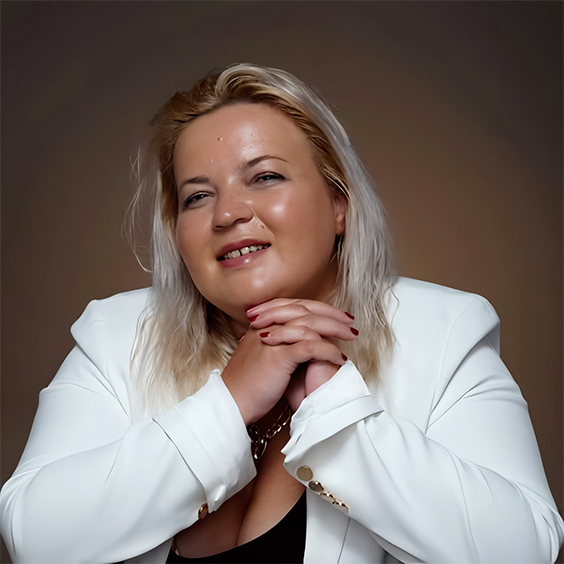
A true academic is always on the path of continuous learning, which stands true for the acclaimed Prof Richard Larson. With a career spanning almost five decades, he has been a mentor to his numerous students at MIT and has been instrumental in many academic research that have had a worldwide impact. He is the author and co-author of six books and author or co-author of more than 175 scientific articles, which are mostly based on his research in the domain of urban planning focusing on emergency response systems, disaster planning, pandemics, queueing, logistics, technology-enabled education, smart-energy houses, and workforce planning. Most recently, he was elected Fellow of the Industry Academy of the International Artificial Intelligence Industry Alliance (AIIA).
With an aptitude for learning since childhood, Prof Richard did his Bachelor of Science in 1965, Master of Science in 1967 and Ph.D. in 1969 in electrical engineering from one of the most prestigious universities in the world, the Massachusetts Institute of Technology. His interest found even further footing as he moved to the Urban Studies and Planning Department and then to the Civil Engineering Department.
In his five decades as a part of MIT’s faculty, he has felt that teaching students new concepts and approaches and watching them integrate them into their professional scope has been one of the most rewarding parts of his career. His insight and guidance have touched the lives of many students who consider him a mentor, having guided them to a path of growth. He is also a member of the interdisciplinary MIT Institute for Data, Systems, and Society (IDSS), which aims to integrate data, systems, and societal challenges.
Multidisciplinary Ventures
Besides his teaching positions at MIT, he has thrived in other roles, including serving as the co-director of the MIT Operations Research Center and as director of the MIT Center for Advanced Engineering Studies. On a wider frontier, Prof Richard has been President of the Operations Research Society of America (ORSA) and its successor organization, the Institute for Operations Research and the Management Sciences (INFORMS). Handling so many roles along with his academic teachings, he never felt that these complementary roles ever hindered his role as a professor; rather, they added more value to his academic interest and contributed to his professional community.
He has also done consulting work with the Institute for Defense Analyses (IDA), the RAND Corporation, and later with his firm, ENFORTH Corporation. Throughout his consulting roles, he felt that it added more layers to his research knowledge and made him apply his theoretical work with actual real-life applications. Another added benefit was that this made his MIT teaching more impactful as he was in the vast expanse of new academic material, which he could provide his students with, thereby bridging the gap between classroom restrictions and real-life solutions.
Research and Consultation
Prof Richard has done extensive research on queues, which has paved the way for new computational techniques like the Queue Inference Engine and the Hypercube Queueing Model, which have become a worldwide sensation. His two papers, which were co-authored with his students, have won Best-Paper-of-the-Year awards, which dealt with H1N1 Influenza Vaccine Distribution in the US. For the government, he has served as an invited member of the Board on Health Sciences Policy with the Institute of Medicine, along with being on the Standing Committee on Emergency Management and Medical Response Integration.
His work as a consultant led him to do multiple projects with the U.S. Postal Service and the City of New York. He has also been a founding director of LINC, Learning International Networks Consortium, which is an MIT-based international project that has held eight international symposia. During the COVID-19 pandemic, he took an active part in research on how Operations Research can provide insights into the monitoring and control of COVID-19 and also in analyzing major structural changes in the US education system.
Technological Advancements
Over so many decades, he has seen technology evolve and expand, which has grown towards being confined to a smaller section but has now spread across the globe with more people having access to it. He also discusses that with an internet connection, individuals can now access resources and data at the click of a button and in the comfort of their homes. He is very appreciative of this as he feels knowledge sharing is a great aid in promoting peace throughout the world.
His initiative, the MIT BLOSSOMS program, is something he is particularly proud of since it sheds light on emerging technologies and makes knowledge sharing accessible to any learner sitting in any corner of the world. Along with this, Prof Richard also feels the vast potential of Artificial Intelligence (AI), which is poised to be a game changer that will grow exponentially in the coming years.
Now that Prof Richard is 81 years old and has subsequently retired from MIT after a grand career, he feels elated to have been at the forefront of many programs and have provided peerless education to his students. The MIT BLOSSOMS program is one such he is particularly proud of where 86 learning videos have been created, which is available on YouTube on the channel of the same name.
His personal love of learning can be felt in each action, and he has always encouraged students to go above and beyond just classroom learning and take the application to the real world. He also advises testing the limits of each individual and not being limited to just one academic frontier. He believes that venturing into multidisciplinary fields can mean more innovation and a broader horizon.
His distinction as an academic and researcher has been recognized far and wide, and he has been bestowed with numerous awards, including the George E. Kimball Medal in 2002, the INFORMS President's Award in 2003, and the Daniel Berg Lifetime Achievement Medal, the International Academy of Information Technology and Quantitative Management in 2017. His book Urban Police Patrol Analysis, which was published in 1972, was awarded the Frederick W. Lanchester Prize by the Operations Research Society of America. He was recently awarded the Albert Nelson Marquis Lifetime Achievement Award from Marquis Who’s Who.


.png)